




The Human Texture of Geopolitics
Anahita Asudani | 2026年6月1日
响应: Georgetown Students Reflect on Spring 2026 Student Dialogue in Beijing and Hong Kong
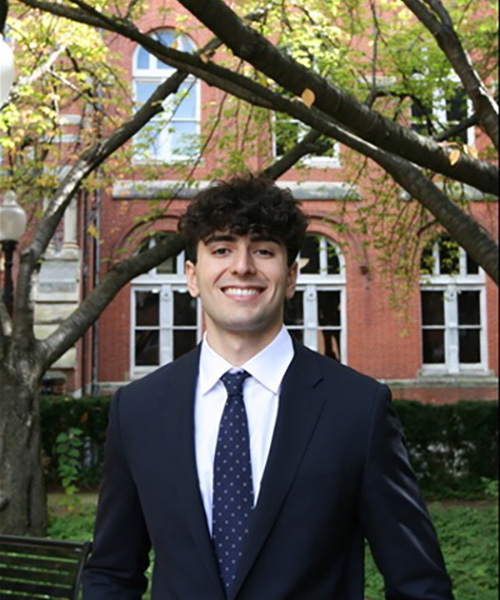
Justin Angelo
The second portion of the U.S.-China Student Dialogue was a trip to China, visiting the Tsinghua students in Beijing, and a new group of students from Hong Kong University in Hong Kong.
The dialogues at each stop were markedly different, shaped by the identities of the students involved. At Tsinghua, students remained open about U.S.-China issues but no longer touched on internal topics in either country, and conversations felt more restricted in larger groups. Hong Kong offered a different experience. Students there engaged with geopolitics more openly, but many did not seem to view themselves as part of the P.R.C.'s foreign policy story — more observer than participant. Underlying nearly every conversation was the same unspoken question: what happens to Hong Kong? Students seemed to regard that future as settled, but it was clear many were still working through what that meant for them.
My underlying assessment of the U.S.-China strategic relationship did not change, but the trip added meaningful context. Chinese students and academics were consistently curious about us — they wanted to understand America as much as we wanted to understand China, and that mutual curiosity was the most important takeaway. Our two countries have strategic interests that conflict with each other's national security, whether purposeful or not. Still, I don't believe the Chinese population — or, optimistically, the government — harbors any real interest in antagonizing the United States; their pursuit of respect and of a defined role in the world has naturally placed us in opposition.
Traveling through the country and talking with students, embassy staff, and others left me with the impression that China is more domestically precarious than is often assumed. An American classmate put it well at a Georgetown event afterward: China is a beautiful and welcoming country full of contradictions. Investors made a compelling case for China as a market, but the preferential treatment given to state-owned enterprises complicates that pitch. A significant class divide was also apparent: the elite in China could bypass information restrictions and live far more freely than those who lacked the resources to, in effect, purchase that freedom.
The scale of domestic surveillance raised further questions about its underlying purpose. This is speculation, but set against unresolved tensions over Taiwan, Hong Kong, Xinjiang, the erosion of local languages and cultures, and broader youth discontent, the surveillance seemed oriented less toward public safety than toward monitoring a population the government appears wary of. It is worth asking how secure a country can be when its greatest concern is domestic social upheaval — a question that applies to the United States too, though we fortunately cannot suppress unrest and are instead forced to address it when the situation calls for action.
Altogether, this was an extraordinary trip. The people we met were kind and welcoming, and I remain grateful for the chance to see a country I had always wanted to visit but never expected I would. The lessons and observations I made will inform my views on the U.S.-China relationship and, hopefully, empower me to have better-informed conversations in the future.
Justin Angelo (SSP'27/28) is a student at Georgetown University studying Security Studies Program at Georgetown University's School of Foreign Service.
Anahita Asudani | 2026年6月1日
Anton Khechoyan | 2026年5月31日

Ewa Tryniszewski | 2026年5月31日

Sarah Lyons | 2026年5月31日

Yajat Gupta | 2026年5月31日

Julia Revill | 2026年5月31日

Samara Schuman | 2026年5月30日