



An Opportunity to Build Familiarity
Anton Khechoyan | 2026年5月14日
响应: Georgetown Students Reflect on Spring 2026 Virtual Discussions with Tsinghua University
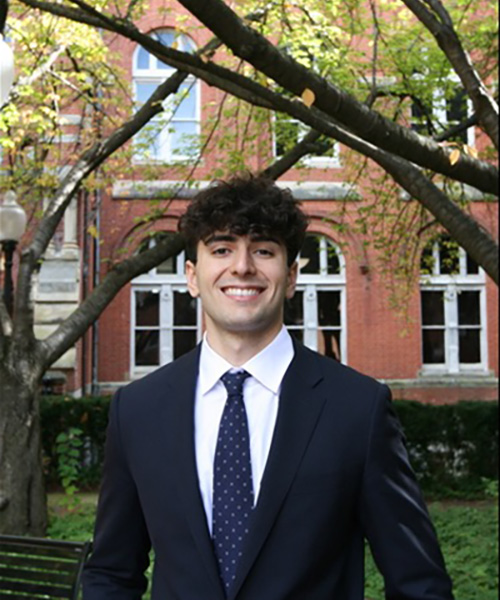
Yajat Gupta
An unprecedented era of rapidly intensifying U.S.-China competition is threatening global peace and stability. This rivalry not only shapes the two countries’ bilateral relations but also the international response to issues including climate change, economic instability, public health, and armed conflict. Amid this crisis, dialogue is crucial to realize that our shared humanity obligates us to look past our divided nationality towards progress.
To that end, the U.S.-China Student Dialogue has been a fantastic opportunity for citizen diplomacy between students and future leaders from Georgetown and Tsinghua universities. While I was initially skeptical of the level of impact that such an initiative could produce, this program provided me with hope. If students that may one day shape their countries’ currently diametrically opposed foreign policies could engage in respectful conversation while making jokes and getting to know each other, it stands to reason that those same individuals will be more willing and more capable of one day communicating across the 3000+ mile divide to create real change.
After all, through conversations with similarly-aged peers from China, we came to the understanding that high-level political conflict or academic study of tensions does not translate to the day to day lives and conversations of ordinary people. Behind every headline are regular individuals with their own feelings, families, friends, struggles, and dreams. Through such interactions, we can actualize the bond between American and Chinese peoples into a substantive foreign policy shift that reduces tensions and improves outcomes for not just the United States and China but also the entire world.
Additionally, we agreed that the structure of the international system is not binding, allowing for potential agency and cooperation, even between the dominant superpower and a rising challenger. While both countries are inclined to pursue some form of regional and global hegemony, there is room for change, especially through track 1.5 diplomatic dialogues that involve international organizations, civil societies, publics, and government actors. But without a platform from which to mitigate U.S.-China competition, these tensions will only continue to grow. Thus, we must take advantage of the potential for solutions via dialogue.
However, this does not mean that dialogue comes without disagreements, or that the path towards peace will be easy. I vividly recall, for example, differing perspectives we had during a conversation regarding the intentions behind the Belt Road Initiative, though the discussion also compelled me to think more critically about the underlying goals of U.S. developmental assistance.
Overall, for progress to be made, people-to-people dialogue is critical to get the ball rolling and create space for nuance, empathy, and mutual understanding. Disagreement is not something to avoid but rather something to embrace, as long as it is accompanied by respect, intellectual curiosity, and an open mind.
I am grateful to Georgetown and Tsinghua for the connection, friendship, and deeper understanding of issues surrounding U.S.-China competition that this program offers, and I look forward to continuing to engage with my peers during our upcoming travels to Beijing and Hong Kong!
Yajat Gupta (SFS'27) is a student at Georgetown University studying international politics with certificates in Asian studies and diplomacy studies.
Anton Khechoyan | 2026年5月14日

Ewa Tryniszewski | 2026年5月14日

Julia Revill | 2026年5月14日

Justin Angelo | 2026年5月14日

Owen Huang | 2026年5月14日

Samara Schuman | 2026年5月14日

Sarah Lyons | 2026年5月14日

Zoe Stone | 2026年5月14日
Anahita Asudani | 2026年5月14日