



The Human Texture of Geopolitics
Anahita Asudani | 2026年6月1日
响应: Georgetown Students Reflect on Spring 2026 Student Dialogue in Beijing and Hong Kong
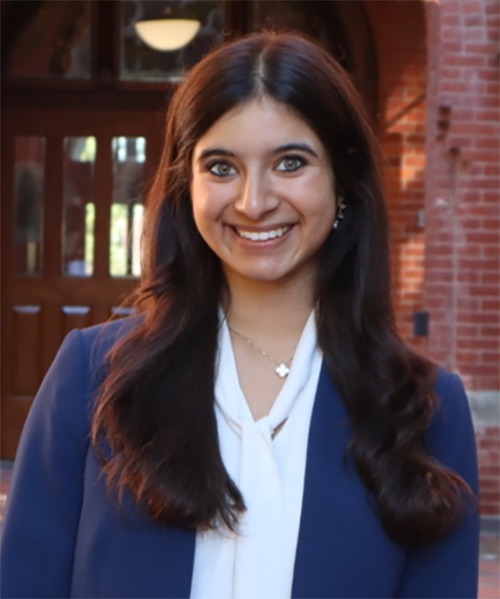
Samara Schuman
There is a Chinese idiom, 求同存异, originally shared by Premier Zhou Enlai at the 1955 Bandung Conference. It roughly translates to "seek common ground while reserving differences." I have spent years studying Mandarin, but it was the U.S.-China Student Dialogue that showed me the opportunities for connection that can arise amidst broader tensions.
The Dialogue is a week-long Georgetown University exchange. My cohort traveled to Beijing and Hong Kong, while another went to Beijing and Shanghai. Of the roughly 13 of us, I was one of only three graduate students. At its core, the program builds on structured dialogue with Chinese university counterparts — for my cohort, at Tsinghua University and the University of Hong Kong. The program is well-paced but jam-packed: in a single day, we spoke with the Deputy Chief of Mission at the U.S. Embassy in Beijing, hiked the Great Wall of China, and flew to Hong Kong for the second half of the trip. But it offers so much more through Georgetown's esteemed alumni network. We had the opportunity to tour Goldman Sachs and the Hong Kong Monetary Authority, witness demonstrations at a robotics startup, and learn customs firsthand at a Chinese business banquet.
I have spent significant time in China and Taiwan as a State Department National Security Language Initiative for Youth participant, a Department of Defense Chinese Language Flagship student, and a Boren Scholar. But every time I went, the programs were structured around language learning. What drew me to the Dialogue were the global-issue topics we discussed with our Chinese counterparts — the future of the international order, the rise of AI, climate change, etc. It was a wonderful opportunity not only to hear their perspectives, but to connect over shared concerns, even when we approached them from different angles. That, I realized, was 求同存异 in motion: the common ground is real, and so are the differences; both can be held at once.
What I valued most as a graduate student was the chance to learn not only from our Chinese counterparts, but from the Georgetown undergraduates as well. I was thoroughly impressed by their dedication to international relations. Seeing many of them as younger siblings — and seeing myself in them back when I was in their academic shoes — reinspired me to keep pursuing my own path. Many came without any Chinese backgrounds, so I enjoyed playing tour guide and big sister, watching a deep interest grow through their eyes.
In parallel with our program ran the U.S.-China Scholar Dialogue, which gave us opportunities to overlap at the University of Hong Kong. The intergenerational approach added depth to the exchange, layering seasoned scholarly perspective onto the student conversations. The greatest honor I had was speaking on a panel with esteemed professors Evan Medeiros and Wu Xinbo, where I shared my own Chinese-learning background. I spoke about how people-to-people diplomacy, made possible by federally funded programs, allowed me to connect with people in China I once assumed I had nothing in common with. Participating on the panel was a chance to reflect on my own U.S.-China journey and revitalize my commitment to improving the relationship. While tensions continue to rise amidst the AI race and the questioning of a new global order, I believe there remain significant opportunities to seek common ground while acknowledging differences. I will continue dedicating my academic and professional journey to that pursuit.
Anahita Asudani | 2026年6月1日
Anton Khechoyan | 2026年5月31日
Ewa Tryniszewski | 2026年5月31日
Justin Angelo | 2026年5月31日

Sarah Lyons | 2026年5月31日
Yajat Gupta | 2026年5月31日
Julia Revill | 2026年5月31日