


Georgetown Brings Together U.S. and Chinese Students for Dialogue during the 2025-2026 Academic Year
During the 2025-2026 academic year, the Georgetown University Initiative for U.S.-China Dialogue on Global Issues hosted two student dialogues with Chinese universities, one with Peking University and another with Tsinghua University, as part of its U.S.-China Student Dialogue program. The dialogues consisted of a series of virtual discussions and in-person study tours to major cities in China during the Spring 2026 semester.
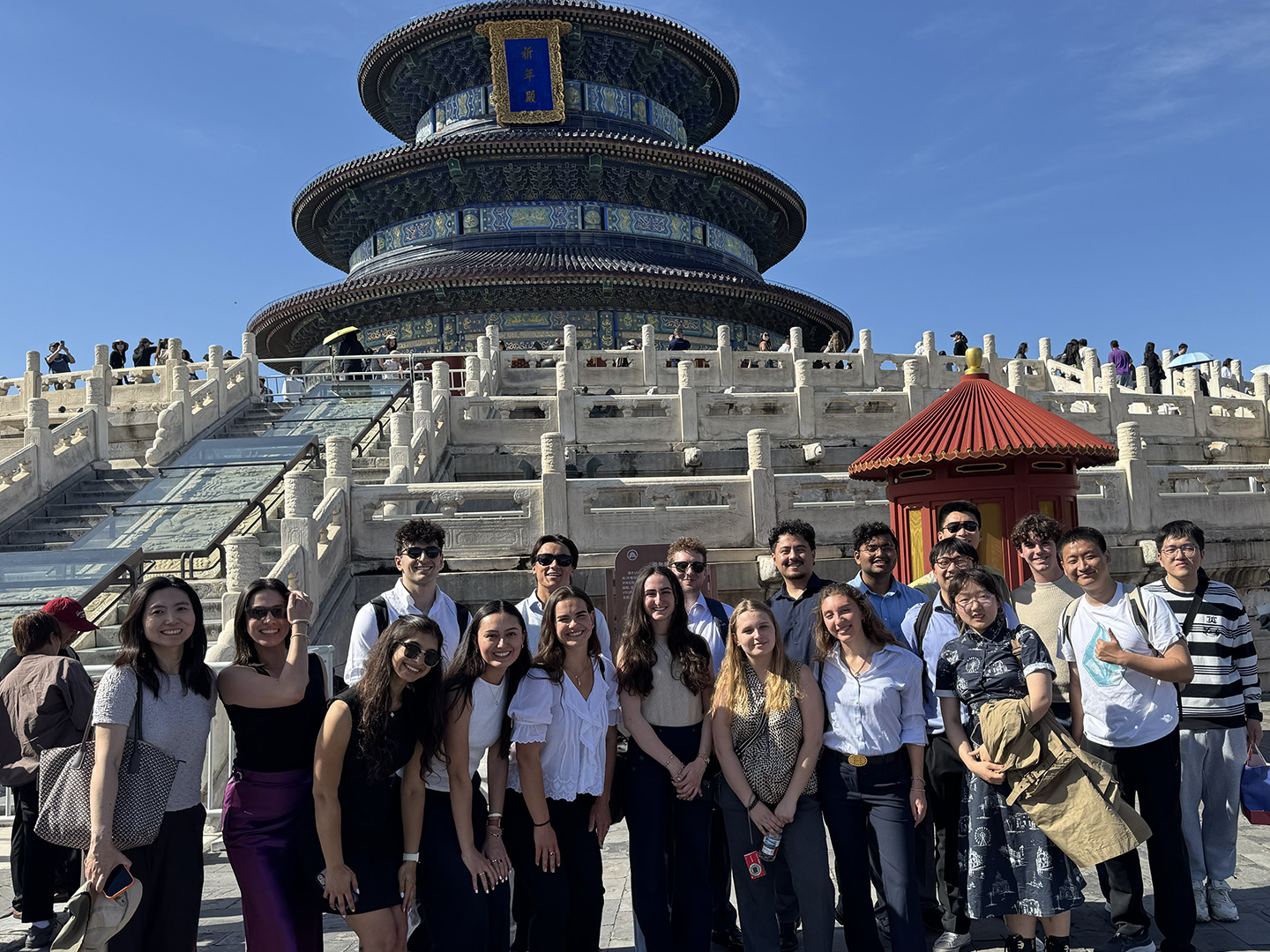
Established in 2020, the U.S.-China Student Dialogue promotes communication and exchange between U.S. and Chinese students, identifying both challenges and opportunities in the bilateral relationship and constructive ways forward. This year’s dialogues marked the initiative's third consecutive year of hosting a combined program of virtual and in-person student dialogues that brings together students from Georgetown University with peers, scholars, diplomats, and businesspeople in China.
March 2026: Dialogue in Beijing and Shanghai
From November 2025 through February 2026, the initiative hosted four virtual dialogue sessions between Georgetown and Peking University students, inviting leading scholars from both universities to lead discussions on various topics in U.S.-China relations, including trade, climate change, artificial intelligence, and U.S. President Donald Trump's planned 2026 visit to Beijing. The dialogues culminated in a study tour taking 15 Georgetown students to Beijing and Shanghai over spring break in March 2026.
The students began their trip in Shanghai, meeting with representatives from several Shanghai-based organizations and business branches including Standard Chartered Bank, the American Chamber of Commerce, and Google. Students learned how Chinese businesses pursue markets abroad from Shi Lu (SFS’03) at Standard Chartered Bank and discussed the current state of China's economy with Eric Zheng (B’99, P’26) at the American Chamber of Commerce. Students then had the opportunity to engage in wide-ranging discussions on the U.S.-China relations with researchers from the Shanghai Institute of International Studies, followed by a half-day workshop with scholars and students from Fudan University.
Arriving in Beijing via high-speed rail, the students engaged in dialogues with their peers at Peking University, bringing their virtual discussions to life. The dialogues concluded with a final workshop presentation hosted by Peking University’s Institute for Global Cooperation and Understanding, where groups focused on five different aspects of the U.S.-China relationship—peace and security, business and trade, climate change, global governance, and technology—presented their recommendations for constructively navigating the future of U.S.-China relations. Outside of the student dialogues, the students also attended briefings at the U.S. Embassy with Beijing and the National Development and Reform Commission.
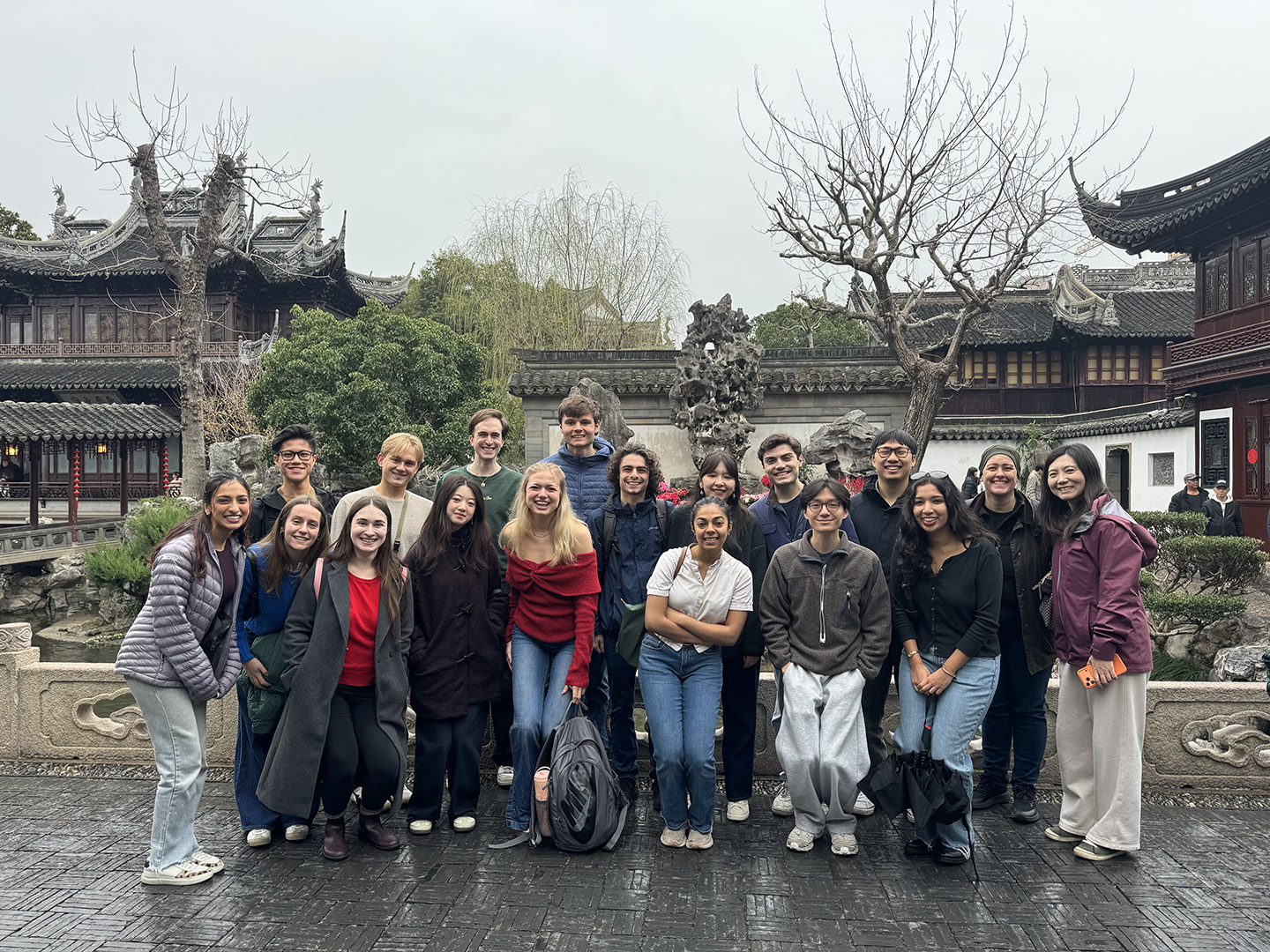
May 2026: Furthering Exchanges in Beijing and Hong Kong
The initiative launched a second set of dialogues between a separate cohort of students from Georgetown and Tsinghua University in March through April 2026. Across four virtual sessions, students held discussions led by invited experts from both universities on the U.S.-China relationship, global development, arms control, and the rescheduled Trump-Xi summit in Beijing. In May 2026, Georgetown University’s Vice President of Global Engagement Tom Banchoff led a group of 13 Georgetown students to engage in a week-long program of dialogue and exchanges in Beijing and Hong Kong.
Landing in Beijing just days after the Trump-Xi summit, the students engaged in extended dialogue sessions with their peers at Tsinghua University and heard from distinguished scholars at Tsinghua’s Center for International Security and Strategy (CISS). The students presented summaries of their discussions during a workshop presentation hosted by CISS and provided recommendations for managing both the challenges and opportunities in the U.S.-China relationship. While in Beijing, the students also visited a Beijing-based venture capital firm, met with diplomats at the U.S. Embassy in Beijing, toured a robot exhibition at technology start-up ROBOTERA, and joined Tsinghua University students on a trip to the Temple of Heaven.
Traveling to Hong Kong for the second half of the trip, the students participated in a roundtable with analysts from Goldman Sachs led by Philippa Vizzone (C'96) and discussed Hong Kong’s unique position as a financial center in Asia during a visit at the Hong Kong Monetary Authority with Hu Yifan (G’03). The students also met with local Georgetown alumni at a private reception featuring guest speakers Georgetown University professor Evan Medeiros and Jinan University professor Chen Dingding and hosted by Leigh Tung Chou (SFS’93), a member of the Georgetown University Board of Directors. At the end of the week, the students participated in a joint student-scholar dialogue at the University of Hong Kong (HKU), engaging in parallel discussion sessions with leading experts from the United States and China and a public event hosted by HKU’s Centre on Contemporary China and the World.
New Perspectives for the Future
Participants from both cohorts valued the opportunity to exchange ideas with peers, scholars, officials, and other stakeholders in China, gaining fresh insights into U.S.-China relations and the people-to-people connections bringing them to life. Solomon Bennett (G’26) remarked that the student exchanges offered new perspectives on how both sides view the relationship:
Though some appear eager to fulfill a Thucydidean fate, our conversations with students at Fudan University and Peking University revealed that perspectives in each country are hardly monolithic. I found that people-to-people dialogue forms the foundation of homegrown diplomacy, and that breaking through the caricaturized fog of both capitals demands a level of curiosity and humility.
Ewa Tryniszewski (SFS’28) reflected on discovering shared similarities with her Chinese peers:
“When we first arrived in Beijing, I was unsure of how the dialogues would unfold. I wanted to be mindful of what topics our Tsinghua counterparts would be willing to discuss and cautious to not break taboo. Yet what surprised me most was not our differing opinions, rather our similarities. In the time we spent together, we shared meals, coffee, and laughs with our new friends. More importantly, during our discussions we found that we agreed on 50%, if not more, of what we believed. Even in disagreement, we were able to understand our perspectives and work to find a productive solution.”